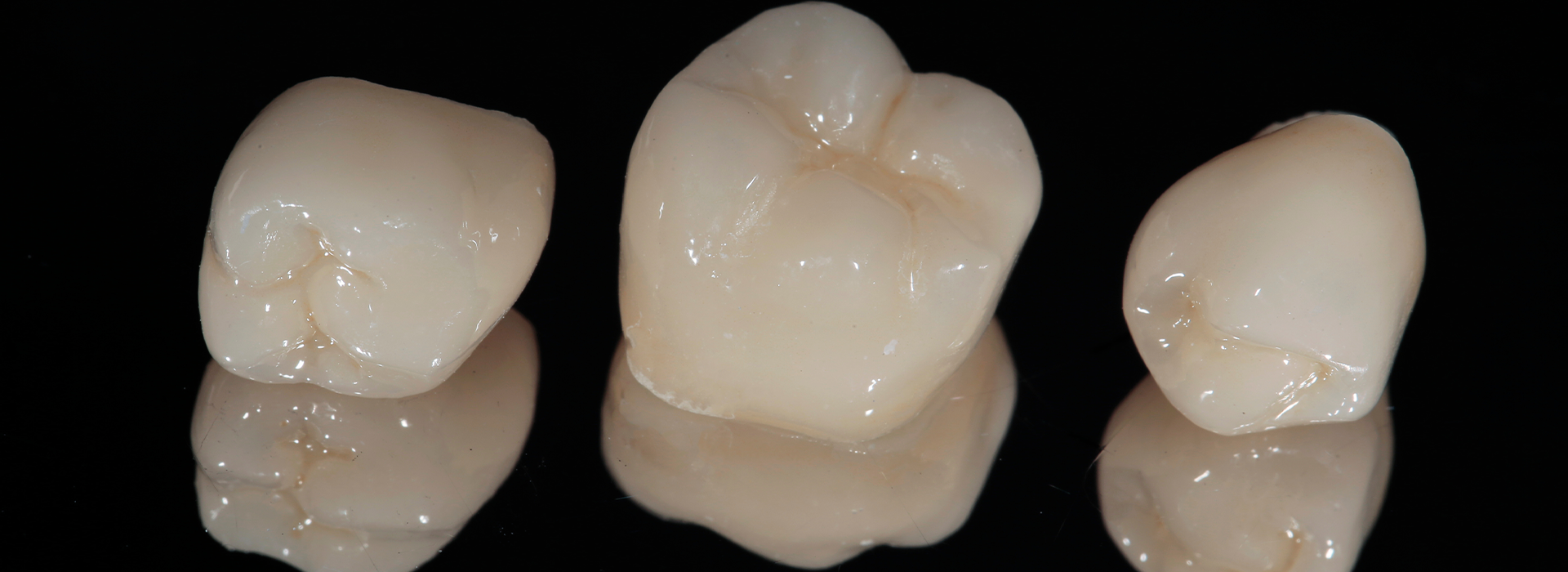

Please follow these instructions while you are awaiting your permanent crown or bridge. Do not hesitate to call the office should you have any questions about your temporary.
Temporary Materials: Temporary crowns may feel rough since they are made of composite material (similar to fillings), which has a rougher texture compared to ceramic. Your final crowns will be made of either zirconia or emax ceramic, both of which are highly polishable and smooth.
Wear and Tear: Temporary crowns aren’t meant to last long, so the surface may start to wear down a bit as you use it. Eating or grinding can cause it to lose its initial smoothness.
What you can do:
Avoid Certain Foods: If you’re eating something that aggravates the rough texture (like sticky or crunchy foods), try to avoid it until you see your dentist.
Be Careful with the Bite: Avoid crunchy, sticky, hard, or stringy (ie celery, spinach) foods when chewing on your temporary crown.
When to call us: If you feel adhesive residue around your crown, if food is getting caught next to your temporary crown, or you feel sharp edges that bother your tongue or gums, please call us right away. If your temporary crown has come off, we will also want to replace it as soon as possible to avoid any tooth shifting and issues with the fit of your ceramic crown.
Temporary crowns should feel
What’s not normal
Sometimes temporary crowns are secured in place in such a way that doesn’t permit flossing. In this case, your dentist will instruct you to use a waterpick or special tiny brush that fits between the teeth. Otherwise, when you floss around your temporary crown, slide the floss down gently between your teeth. Once it’s in place, don’t pull it back up. Instead, just let go of one side and pull the floss out to the side (toward your cheek). That way, you won’t accidentally pull the crown off.
Please call us so that we can recement your temporary crown, even in the absence of pain or sensitivity. Leaving your tooth exposed may allow it to shift and create issues with the fit of your ceramic crown.
While a dental filling is designed to replace a portion of a decayed or damaged tooth, a dental crown offers full coverage to restore the tooth’s entire outer surface. A well-fitting dental crown not only protects and strengthens the underlying tooth structure, but it also restores the tooth’s appearance and function.
The procedure for getting an all-ceramic crown is much like the procedure for getting any other type of crown. In all cases, the tooth needs to be prepared, an impression taken, and a permanent crown cemented into place. A single all-ceramic crown can typically be fabricated over the course of two visits. However, with CAD/CAM technology, a same-day crown can be fabricated from start to finish in a single visit. With the first approach, a temporary crown is typically worn until the second visit, when the permanent restoration is placed. As with every treatment plan, our office will explain your best options in care.
As the name implies, a temporary crown is only worn for a short time until the permanent crown is placed. A temporary crown is typically fabricated from durable tooth-colored dental acrylics. While designed to protect the underlying tooth between appointments, and until your new permanent crown gets placed, a temporary crown is also fabricated to look like a natural tooth and maintain the look of your smile.
While you should feel better having an attractive and functional tooth to restore your smile, your tooth may feel a little sensitive following treatment. This initial sensitivity will subside. We take great care to make sure your new restoration looks great, fits well, and your bite is perfect. However, we’re always happy to make any minor adjustments to ensure your comfort.
With some exceptions, teeth with root canal procedures are typically restored and protected from further damage with a full-coverage crown. Based on what’s best for your smile, our office will recommend the most appropriate restoration to maintain the health and longevity of your tooth following a root canal procedure.
A dental crown is a long-term restoration that, if properly cared for, can serve you well for many years to come. Once your new crown is placed, it requires the same brushing, flossing, and periodic checkups as your natural teeth. Avoid biting your fingernails and chewing on hard or sticky objects such as ice, pencils, or taffy, which can damage or loosen your crown. Remember, clenching and grinding your teeth puts excessive pressure on both natural teeth and dental restorations. Unless treated, this habit can compromise the longevity and integrity of your dental work, including crowns.
Although your new all-ceramic crown restores the tooth's strength, form, and function, you can still develop dental disease in the absence of proper care. To prevent gum disease and tooth decay, it’s essential to brush and floss as instructed and see our office for routine checkups, cleanings, and care.
How long a dental crown lasts depends on various factors, including your level of oral care, diet, and oral habits. While the standard answer is that dental crowns can last anywhere from 5 to 15 years, existing literature confirms that most dental crowns remain in place at 15 to 20 years.
At the office of Smiles Elevated, we strive to provide the highest quality of care to address all your dental needs. Once we’ve had the opportunity to examine your smile, we can give you a clear picture of any dental issues that are present, along with a quote for how much treatment will be. The cost of dental crowns can vary a little, depending on the type of crown and its location. Our goals are to provide the highest quality of care and help patients begin treatment without additional financial stress or delay. We’re always happy to answer all your questions on dental insurance coverage, available financing, and payment plans.
Coverage for all-ceramic crowns depends on your dental insurance plan. Today, many dental plans provide some level of coverage for all-ceramic crowns. At the office of Smiles Elevated, we work with patients to optimize their dental benefits and get the care they need to maintain healthy and beautiful smiles!
Share Your Smile Rewards
Our New Patient Referral Program
Learn More »